Marketing becomes harder to manage as a business grows. At first, you may only have a few customers and a small email list, so keeping up with everything manually does not seem like a big problem. But as more people visit your website, join your email list, ask questions, and buy your products or services, those small tasks can quickly become a lot of work.
You may need to welcome new subscribers, follow up with leads, remind customers about products they viewed, send newsletters, recover abandoned carts, and keep existing customers engaged. Doing all of this manually can take hours every week.
This is where marketing automation tools become useful. They can handle repetitive marketing tasks based on customer actions, allowing you to spend more time on strategy, content, sales, and customer relationships.
But choosing the right platform is not always easy. There are dozens of options available, and each one has different strengths. Some are built around CRM and sales, some focus heavily on email automation, while others are designed specifically for ecommerce.
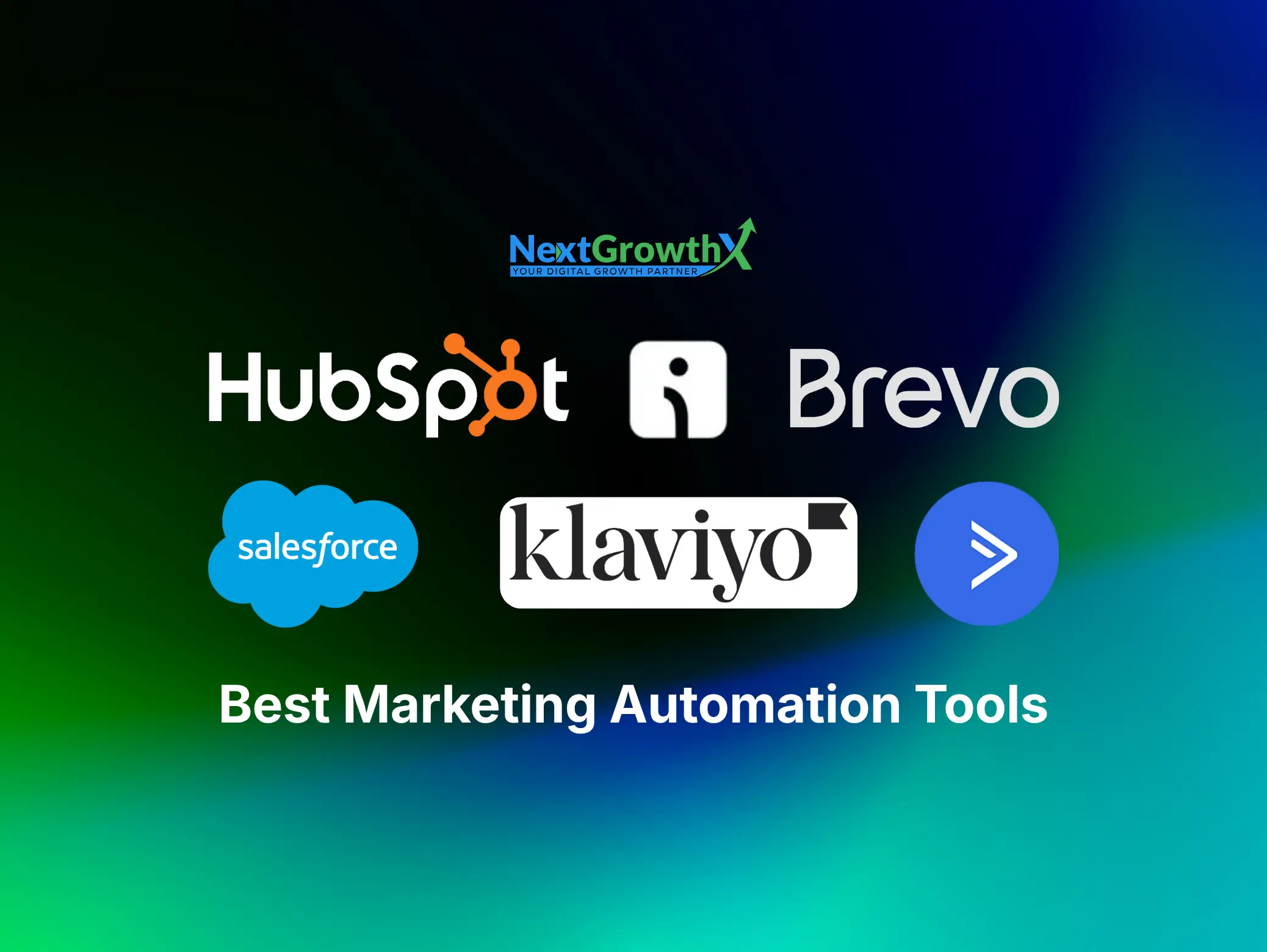
In this guide, we will look at 7 of the best marketing automation tools in 2026, what each one is good at, and which type of business may benefit most from it.
Why Do Businesses Need Marketing Automation Tools?
The biggest reason businesses use automation is to save time. Marketing teams often spend a large part of their day handling repetitive work. Automation can take care of many of those tasks in the background.
It can also help businesses respond faster. If someone submits a form or signs up for an offer, an automated message can reach them almost immediately instead of waiting for someone on your team to notice the submission.
Another benefit is consistency. When you create a well planned workflow, every customer can go through the same basic process without your team having to remember every step.
Automation can also improve the customer experience. Instead of sending the same message to everyone, you can create different journeys based on what people do. Someone who has never purchased from you can receive different content from an existing customer.
Most importantly, automation gives you more useful customer data. You can learn how people interact with your emails, website, products, and campaigns. That information can help you improve your marketing over time.
The 7 Best Marketing Automation Tools in 2026
There is no single platform that is perfect for every business. The seven tools below were selected because they cover some of the most common marketing automation needs, from simple email campaigns to advanced ecommerce and enterprise marketing.
Best for: Businesses that want CRM, marketing, sales, and automation together
HubSpot is one of the strongest choices for businesses that want to connect their marketing and sales activities in one place. Its workflow system can respond to events such as form submissions, changes in customer information, campaign engagement, and sales activity. Workflows can then send emails, create tasks, update CRM records, assign leads, and trigger actions in connected tools.
This makes HubSpot particularly useful for businesses that have a sales process rather than simply sending newsletters. For example, a company could create a workflow that starts when someone requests a demo. The system could update the contact record, send a confirmation email, assign the lead to the right salesperson, and create a follow up task.
HubSpot is also useful when marketing and sales teams need to work from the same customer information. Instead of keeping contact details in one system and marketing activity somewhere else, the information can be connected through the HubSpot platform.
The platform can be a good fit for growing businesses, B2B companies, agencies, and service businesses that want a more complete system. However, advanced automation features depend on the subscription level, so businesses should look carefully at their requirements before choosing a plan.
Key strengths: CRM integration, workflow automation, lead management, email automation, customer data, sales coordination, and reporting.
Best for: Advanced email automation and lead nurturing
ActiveCampaign is a strong option for businesses that want detailed email automation and customer journeys. Its automation features allow marketers to create workflows based on customer actions and use conditions to decide what should happen next.
For example, you could create a welcome sequence for new subscribers. Someone who opens your emails regularly could receive more advanced content, while someone who does not engage could receive a different message. This allows your marketing to respond to customer behavior instead of treating every contact in exactly the same way.
ActiveCampaign also supports automation across multiple channels and connects with a large number of other applications. Its current platform includes email, SMS, WhatsApp, website and event tracking, segmentation, and AI assisted campaign features.
Another useful approach is to keep your automations manageable. ActiveCampaign itself recommends creating several smaller automations rather than putting everything into one huge workflow. This can make your campaigns easier to understand, test, and maintain.
For businesses that care heavily about lead nurturing and personalized email journeys, ActiveCampaign is one of the strongest options to consider.
Key strengths: Email automation, lead nurturing, segmentation, customer journeys, multichannel communication, and integrations.
Best for: Beginners and businesses that need simple email automation
Mailchimp is a familiar name in email marketing, and it remains a practical option for businesses that want to start with straightforward automation.
Instead of building complicated marketing systems from the beginning, a small business can use Mailchimp to create email campaigns, customer journeys, signup processes, and automated follow ups.
For example, a business could create a welcome journey for new subscribers. A customer joins the list and receives an introduction email. A few days later, another message provides useful information. A later message could introduce a product or service.
Mailchimp has also been expanding its focus on customer journey automation. Its current approach connects different marketing channels and uses customer behavior to determine what happens next. Mailchimp describes this as a way to connect email, text messages, social activity, and other touchpoints into a more coordinated customer journey.
The main advantage of Mailchimp is its accessibility. It can be a good starting point if you are new to marketing automation and do not need highly complicated workflows.
However, businesses with very advanced automation requirements may eventually want a platform with deeper workflow controls.
Key strengths: Email campaigns, customer journeys, audience management, templates, and simple automation.
Best for: Small businesses that want email and SMS automation
Brevo is worth considering if you want to combine email marketing with SMS and other customer communication in one platform.
The platform provides automation features that can help businesses create workflows based on customer activity. These workflows can include different conditions, delays, and actions, allowing you to create a more organized customer journey. Brevo’s automation resources also cover areas such as segmentation, lead scoring, abandoned cart workflows, and automation statistics.
This can be useful for businesses that want to go beyond traditional email newsletters. For example, an online business could send an automated email after a customer signs up and use another communication channel later when a timely reminder is appropriate.
Brevo is particularly attractive for smaller businesses because it gives them access to several marketing channels without requiring a large enterprise marketing system.
It is also a good choice for businesses that want to gradually build their automation strategy. You can start with simple workflows and introduce more advanced processes as your audience and marketing needs grow.
Key strengths: Email automation, SMS marketing, segmentation, customer workflows, lead management, and multichannel communication.
Best for: Ecommerce businesses
Klaviyo stands out when ecommerce is at the center of your business.
Online stores have access to a large amount of customer behavior data. You can see what products people browse, what they purchase, when they abandon a cart, and how often they return. Klaviyo is designed to use this information to create automated customer journeys.
Its automated flows can respond to actions such as joining a list, checking out, completing an order, or reaching a particular date. You can use these triggers to create personalized communication for different customers.
A simple example is an abandoned cart workflow. Someone adds a product to their cart but does not complete the purchase. Instead of manually checking who abandoned a cart, the system can automatically start a sequence that reminds the customer about the product.
Klaviyo also provides prebuilt flows and a visual workflow builder. Its current tools support email, SMS, and push notifications, allowing businesses to create connected customer journeys rather than managing every channel separately.
This makes Klaviyo particularly useful for ecommerce brands that want to improve repeat purchases, customer engagement, and personalized marketing.
Key strengths: Ecommerce automation, customer behavior tracking, email, SMS, segmentation, product recommendations, and personalized flows.
Best for: Large B2B companies and enterprise marketing teams
Adobe Marketo Engage is designed for organizations with more complex marketing requirements. It is not necessarily the first tool a small business should choose, but it can be powerful when a company has large databases, long sales cycles, and multiple marketing channels.
Marketo Engage provides features for forms, landing pages, smart campaigns, segmentation, email marketing, lead scoring, CRM synchronization, website integration, and marketing analytics. Adobe also positions the platform around personalized omnichannel campaigns and advanced marketing operations.
For example, a large B2B company may have thousands of prospects at different stages of the buying process. Some may have only downloaded a resource, while others may have attended a webinar or requested a sales meeting.
Instead of sending the same message to everyone, Marketo Engage can help marketers create different programs based on customer information and behavior.
The platform is especially relevant for companies that have dedicated marketing teams and more complicated processes. It can support detailed lead nurturing and coordination between marketing and sales.
The tradeoff is complexity. A smaller company with only a few simple campaigns may not need everything Marketo Engage provides.
Key strengths: Lead scoring, B2B marketing automation, segmentation, CRM integration, campaign management, personalization, and analytics.
Best for: Small and growing ecommerce stores
Omnisend is another strong option for ecommerce businesses, particularly stores that want email, SMS, and push notifications within their automation strategy.
Its visual automation builder allows businesses to create workflows using triggers, delays, conditions, and different communication channels. The platform provides prebuilt workflows for common ecommerce situations such as welcome messages, abandoned carts, post purchase communication, product abandonment, customer reactivation, and replenishment reminders.
This can make it easier for a store owner to get started without building every workflow from scratch.
Omnisend can also connect with ecommerce platforms including Shopify and WooCommerce. Once connected, product, order, and customer data can be used for targeted campaigns and automation.
For example, an online store could automatically welcome a new subscriber, remind a customer about an abandoned cart, send a post purchase message, and later recommend another product.
That type of automation can save a small ecommerce team a significant amount of manual work.
Key strengths: Ecommerce automation, abandoned cart recovery, email, SMS, push notifications, customer segmentation, and post purchase workflows.
Marketing Automation Tools Compared
| Tool | Best for | Main strength |
|---|---|---|
| HubSpot | Growing businesses | CRM and marketing automation |
| ActiveCampaign | Lead nurturing | Advanced email workflows |
| Mailchimp | Beginners | Simple customer journeys |
| Brevo | Small businesses | Email and SMS automation |
| Klaviyo | Ecommerce brands | Behavior based automation |
| Adobe Marketo Engage | Enterprise B2B | Advanced marketing operations |
| Omnisend | Ecommerce stores | Ecommerce email and SMS automation |
These platforms serve different needs, so the most expensive or feature rich option is not automatically the best choice.
Final Thoughts
The right marketing automation tools can make a big difference when your business starts handling more leads, customers, and marketing activity. They can reduce repetitive work, improve follow up, and help you communicate with customers at the right moment.
For businesses that want an all in one CRM and marketing system, HubSpot is a strong option. If advanced email workflows and lead nurturing are the priority, ActiveCampaign is worth considering. Mailchimp can be a practical starting point for beginners, while Brevo is useful for businesses that want email and SMS automation.
For ecommerce, Klaviyo and Omnisend offer strong customer behavior based automation. Larger B2B organizations with more complicated marketing operations may find Adobe Marketo Engage a better fit.
The most important thing is not to choose a tool simply because it has the most features. Choose one that matches your business model, marketing goals, budget, team, and customer journey.
When automation is planned properly, it does more than save time. It helps your business stay consistent, respond faster, understand customers better, and create a smoother experience from the first interaction to the final purchase.
Frequently Asked Questions
What are marketing automation tools?
Marketing automation tools are software platforms that automate repetitive marketing tasks such as email campaigns, lead follow ups, customer segmentation, and customer journeys. They help businesses communicate with customers at the right time without requiring every action to be handled manually.
Which marketing automation tool is best for small businesses?
There is no single best option for every small business. HubSpot, ActiveCampaign, Mailchimp, and Brevo can all be good choices depending on your needs. For simple email campaigns, Mailchimp or Brevo may be enough, while businesses that need CRM and more advanced workflows may prefer HubSpot or ActiveCampaign.
What is the best marketing automation tool for ecommerce?
Klaviyo and Omnisend are two strong options for ecommerce businesses. Both can automate campaigns based on customer behavior, including abandoned carts, purchases, browsing activity, and customer engagement. The better choice depends on your store size, marketing channels, budget, and automation requirements.
Can marketing automation increase sales?
Yes, marketing automation can support sales by helping businesses follow up with leads, recover abandoned carts, recommend relevant products, and keep customers engaged. However, automation itself does not guarantee more sales. The results depend on the quality of your offers, content, targeting, customer experience, and overall marketing strategy.
How do I choose the right marketing automation platform?
Start by identifying what you actually want to automate. Consider your business type, email list size, sales process, ecommerce requirements, budget, integrations, and the level of automation you need. Choose a platform that solves your current problems while giving you enough room to grow without adding unnecessary complexity.