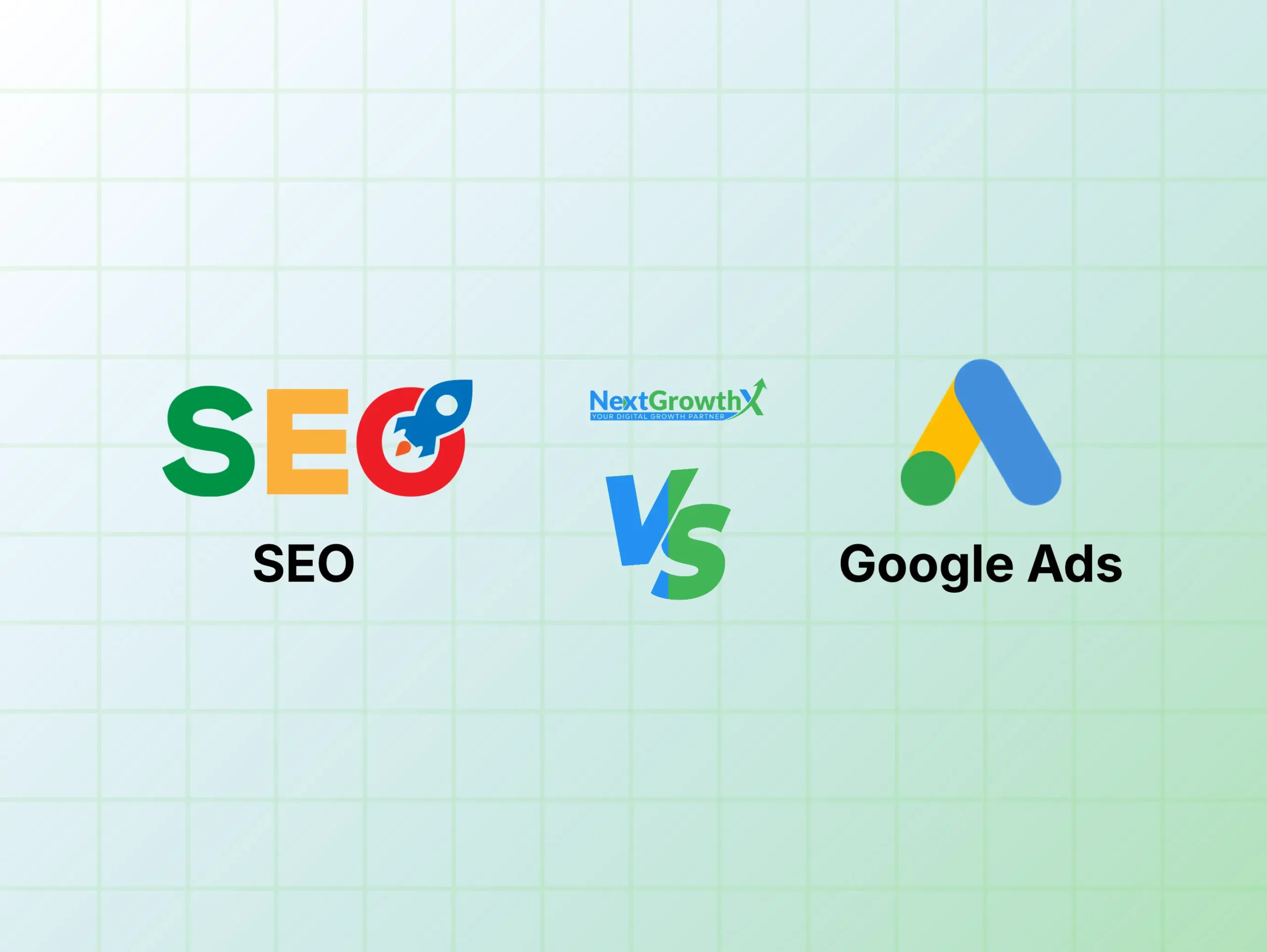
When a business wants more visibility on Google, two strategies usually come up: SEO vs Google Ads.
Both can help businesses reach people who are searching for products, services, or information. But they work in very different ways.
SEO focuses on improving a website so its pages can appear in Google’s unpaid organic search results. Google Ads, on the other hand, allows businesses to pay for advertising placements that can appear on Google Search and other Google advertising channels. Google clearly separates paid advertisements from organic search results, and payment for advertising does not directly change a site’s organic search ranking.
That difference affects almost everything else, including how quickly you can get traffic, how you spend money, how you measure results, and how you build your search presence.
So when comparing SEO vs Google Ads, the better question is not simply which one is better. The more useful question is:
SEO vs Google Ads at a Glance
| Factor | SEO | Google Ads |
|---|---|---|
| Traffic type | Organic | Paid |
| Payment | No payment for organic clicks | Usually pay for clicks or other campaign interactions depending on campaign type |
| Speed | Usually takes time to build | Can start generating traffic after campaigns are approved and running |
| Main work | Content, technical SEO, authority, website improvements | Campaign setup, keywords, ads, bidding, landing pages |
| Targeting | Mainly based on search relevance and website quality | Keywords, audiences, location, language, devices, schedule, and other settings |
| Traffic after stopping investment | Organic visibility may continue | Paid traffic generally stops when campaigns stop |
| Control | Less direct control over exact placement | More control over budget and targeting |
| Best use cases | Building organic visibility and sustainable search presence | Immediate visibility, targeted campaigns, offers, leads, and testing |
This comparison is simplified because both SEO and Google Ads contain many different strategies and campaign types.
The Biggest Difference Between SEO and Google Ads
The simplest way to understand SEO vs Google Ads is to think about earned visibility versus paid visibility.
SEO works toward organic visibility.
Google Ads buys advertising exposure.
An organic result appears because Google’s search systems determine that the page is relevant to the search and appropriate to show.
A Google Search ad appears through the advertising system and is clearly labeled as an advertisement.
Neither system guarantees a specific position simply because you invest time or money.
With SEO, rankings depend on many factors.
With Google Ads, ad placement depends on the auction and campaign factors such as bids, relevance, ad quality, landing page experience, and competition.
Speed: SEO vs Google Ads
This is one of the biggest practical differences.
SEO takes time
SEO is usually a longer process.
A new website may need time to be crawled, indexed, understood, and evaluated. New content also needs time to establish visibility and compete with existing pages.
This does not mean SEO always takes a fixed number of months. Results can vary considerably depending on the website, industry, competition, content, technical condition, search demand, and many other factors.
Google Ads can provide faster visibility
Google Ads can put an eligible advertisement in front of relevant searches once a campaign is running.
That makes paid search useful when a business has an immediate promotion, a new service, a product launch, or a need to generate traffic without waiting for organic visibility to develop.
So in SEO vs Google Ads, timeline is an important consideration.
If your priority is immediate paid visibility, Google Ads can provide a different path from building organic rankings.
If your goal is to develop organic search visibility, SEO requires a different investment of time and resources.
Cost: SEO vs Google Ads
Cost is often misunderstood.
People sometimes say SEO is free because you do not pay Google for organic clicks.
That is not the same as saying SEO has no cost.
SEO can require investment in:
- SEO professionals
- Content writers
- Developers
- Technical improvements
- Content production
- SEO software
- Website improvements
- Digital PR or link related activities
- Google Ads has a more direct advertising cost.
You set a campaign budget and bidding approach, and the amount you spend depends on factors such as your targeting, competition, bids, campaign performance, and traffic.
Google states that advertisers can control their budgets and bidding, while actual costs can vary based on the advertising auction and other factors.
The right comparison is therefore not simply:
SEO equals free
and
Google Ads equals expensive
A better comparison is how each channel uses your resources.
SEO invests resources into building organic visibility.
Google Ads invests advertising budget into paid visibility.
Control and Targeting
Google Ads generally provides more direct control over who you want to reach and how your campaign is configured.
Google allows advertisers to adjust settings such as location, language, devices, schedules, keywords, and other targeting options depending on the campaign.
That can be particularly useful for businesses with a specific target audience.
For example, a local service provider may want to target people in specific locations rather than people searching from an entire country.
SEO works differently.
You optimize your website and content to make it relevant to searches. You cannot simply tell Google that you want your organic page to appear at a specific position for a specific group of people.
This is another major distinction when looking at SEO vs Google Ads.
Which One Gives You More Control?
Google Ads gives you more direct campaign control.
You can adjust:
- Budget
- Bids
- Keywords
- Locations
- Ad copy
- Landing pages
- Schedules
- Devices
- Campaign targeting
You can also pause campaigns or change budgets based on performance.
SEO gives you control over your website and optimization process, but you do not control Google’s organic ranking system.
You can improve your pages, but you cannot pay Google to guarantee an organic ranking.
Google specifically states that advertising payment does not affect organic search results.
What Happens When You Stop Spending?
This is another important difference.
Suppose you run Google Ads for a service and stop the campaign.
The paid advertisements stop receiving impressions from that campaign once they are no longer active.
SEO works differently.
If you stop actively working on SEO, existing organic visibility does not automatically disappear overnight. Pages that already rank can continue receiving organic traffic.
However, rankings can change over time because competitors publish new content, search results change, websites change, and Google’s systems evolve.
So SEO can potentially continue generating organic traffic without paying for every individual click, but maintaining organic visibility still requires ongoing attention.
Which One Is Better for a New Business?
A new business may benefit from considering both approaches based on its immediate goals.
For example, a new service business may use Google Ads to test whether people are searching for a particular service and whether those searches can generate leads.
At the same time, the business can build SEO foundations through useful service pages, location pages, educational content, technical improvements, and other organic search work.
This creates an interesting relationship between the two channels.
Google Ads can provide immediate campaign data.
SEO can build organic visibility over time.
The two strategies can therefore support different stages of the same marketing process.
SEO vs Google Ads for Local Businesses
Local businesses often need to reach people who are searching for services in a specific area.
Consider a plumber, dentist, law firm, restaurant, clinic, or home service company.
SEO can help the business appear in relevant organic search results and local search experiences.
Google Ads can provide paid visibility for searches related to the services and locations being targeted.
Google Ads also supports location and other campaign targeting options, which can be useful when a business serves a defined geographic area.
For a local business, the choice between the two may depend on whether the priority is immediate lead generation, long term organic visibility, or a combination of both.
When Google Ads Can Make Sense
Google Ads can be particularly relevant when you need:
- Immediate paid visibility
- A controlled advertising budget
- Specific geographic targeting
- Traffic for a new offer
- Lead generation
- Promotion of a time sensitive offer
- Keyword testing
- A measurable paid campaign
Google Ads also provides detailed campaign metrics such as impressions, clicks, cost, average cost per click, conversions, and cost per conversion.
This makes it possible to evaluate paid campaigns using measurable advertising data.
When SEO Can Make Sense
SEO can be particularly relevant when you want:
- Organic search visibility
- Long term search presence
- More useful website content
- Visibility across many related searches
- A stronger website structure
- Ongoing organic traffic opportunities
- Content that continues attracting searchers
SEO is particularly useful when a business can consistently create genuinely useful content and improve its website over time.
Final Thoughts
The SEO vs Google Ads decision is not really about finding one universal winner.
SEO and Google Ads are different search marketing channels with different mechanics, costs, timelines, and levels of control.
SEO focuses on organic visibility and improving a website’s ability to appear for relevant searches. Google Ads provides paid advertising opportunities with configurable budgets, targeting, bidding, and campaign measurement.
For some businesses, immediate paid visibility may be important. For others, building organic search visibility may be a major part of their long term marketing strategy. Many businesses can also use both, with each channel serving a different purpose.
The best starting point is to define your business goal, understand your audience, calculate what a customer or lead is worth, and then decide how paid and organic search can contribute to that goal.
Frequently Asked Questions
What is the main difference between SEO vs Google Ads?
The main difference in SEO vs Google Ads is that SEO focuses on unpaid organic search visibility, while Google Ads uses paid advertising placements. Google labels its advertisements separately from organic results.
Is SEO cheaper than Google Ads?
There is no universal answer in the SEO vs Google Ads comparison. SEO does not charge you for each organic click, but SEO still requires resources such as content, technical work, tools, and professional expertise. Google Ads requires an advertising budget and campaign management.
Which is faster, SEO vs Google Ads?
In general, Google Ads can provide paid search visibility more quickly once a campaign is active and eligible to serve. SEO usually requires more time to build organic visibility. The exact timeline varies by website, industry, competition, and campaign conditions.
Can I use SEO and Google Ads together?
Yes. SEO vs Google Ads does not have to be an either or decision. Businesses can use Google Ads for paid search campaigns while investing in SEO to build organic visibility.
Does Google Ads improve SEO rankings?
No. Paying for Google Ads does not directly improve a website’s organic search ranking. Google states that advertising payment has no impact on organic search results.